
Yes, robot vacuums can go over bumps, but the capability varies among different models. Some robot vacuums are designed to navigate small bumps and thresholds, while others may struggle or get stuck.
Factors such as wheel size, sensor technology, and power of the vacuum determine a robot’s ability to handle bumps effectively. It’s important to consider these features when choosing a robot vacuum for your home. Robot vacuums have become increasingly popular for their ability to automate the cleaning process, offering convenience and efficiency to homeowners.
These intelligent devices use sensors and mapping technology to navigate around obstacles and clean various surfaces. However, their ability to handle bumps and obstacles differs based on their design and features. Understanding how robot vacuums navigate and handle bumps can help you choose the best model for your home’s specific needs. With the continued advancements in technology, robot vacuums are continually improving their capabilities to overcome bumps and other obstacles for efficient home cleaning.
How Robot Vacuums Handle Different Floor Surfaces
Hardwood And Tile Floors
Robot vacuums are designed to effortlessly glide over hardwood and tile floors. Equipped with sensors, they can detect and navigate around obstacles and bumps, ensuring a thorough and efficient clean without getting stuck.
Carpeted Floors
When it comes to carpeted floors, robot vacuums can navigate over them with ease. Their powerful suction and rotating brushes help to remove dirt and debris from the carpet fibers, providing a deep clean without damaging the surface.
Low-pile Vs High-pile Carpets
Low-pile carpets present minimal resistance to robot vacuums, allowing them to move smoothly and clean effectively. On the other hand, high-pile carpets may pose a bit more challenge due to their thicker and plush texture, but modern robot vacuums are designed to handle such surfaces with improved efficiency and performance.
Understanding The Obstacle Detection And Navigation Systems
Sensors Used By Robot Vacuums
Robot vacuums are equipped with an array of advanced sensors that allow them to detect and navigate around obstacles. These sensors include infrared sensors, cliff sensors, laser distance sensors, and bump sensors. Infrared sensors enable the robot vacuum to detect objects in its path, while cliff sensors prevent the device from falling off stairs or ledges. Laser distance sensors help in creating a more accurate map of the area, and bump sensors provide tactile feedback when the vacuum collides with an obstacle.
Mapping And Navigation Technology
Robot vacuums use mapping and navigation technology to efficiently maneuver around the house. This technology often utilizes simultaneous localization and mapping (SLAM) algorithms to create a map of the cleaning area and determine the vacuum’s precise location within it. By using SLAM, robot vacuums can effectively navigate over bumps, avoid obstacles, and plan efficient cleaning routes.
Overcoming Small Bumps And Thresholds
Robot vacuums are designed to maneuver over small bumps and thresholds with ease. Their advanced sensors and technology enable them to navigate various surfaces and obstacles, ensuring efficient cleaning throughout the home. With their ability to adapt to different terrains, robot vacuums provide a convenient and reliable cleaning solution for modern households.
Climbing Over Small Door Thresholds
Robot vacuums have come a long way in terms of technology and innovation. Gone are the days when they would get stuck at the slightest bump or struggle to navigate uneven surfaces. Now, these clever little devices are designed to conquer small door thresholds effortlessly. They are equipped with advanced sensors and powerful motors that allow them to climb over small obstacles with ease.
When a robot vacuum encounters a small door threshold, it uses its sensors to detect the height and shape of the bump. The powerful motor then adjusts the wheels accordingly to provide enough traction to climb over the threshold. The combination of intelligent sensors and powerful motors ensures that the robot vacuum glides over the threshold without any hesitation or difficulty.
Handling Transition Strips
Transition strips are commonly found in households, especially between different types of flooring. These strips pose a potential obstacle for robot vacuums, but modern designs have addressed this issue effectively. With their advanced sensors and adaptability, robot vacuums can smoothly handle transition strips.
When a robot vacuum approaches a transition strip, it uses its sensors to detect the raised height and different surface levels. The vacuum then adjusts its wheels and brushes to seamlessly move over the strip without any disruption. This ensures that the cleaning process remains uninterrupted while the robot navigates from one type of flooring to another.
Moving Over Rugs And Mats
Rugs and mats are common additions to households, but they can create a challenge for robot vacuums if they are not designed to handle these surfaces effectively. Fortunately, many robot vacuum models are equipped with features that enable them to effortlessly move over rugs and mats.
Robot vacuums use their sensors to detect the presence of rugs or mats on the floor. They then adjust their suction power and brush height to ensure effective cleaning without getting stuck. This intelligent feature allows the robot vacuum to seamlessly transition from hard floors to soft surfaces without any issues or limitations.

Challenges With Higher Obstacles
Robot vacuums have revolutionized the way we clean our homes, but they are not without their limitations. While these handy gadgets can effortlessly navigate around furniture and other obstacles, they may face some challenges when it comes to higher obstacles. In this section, we will explore two common challenges: stairs and steps, and dealing with raised edges.
Stairs And Steps
One of the main limitations of robot vacuums is their inability to tackle stairs and steps. Due to their design, they lack the ability to climb or descend stairs like humans do. For this reason, it is crucial to ensure that your living space is safe for your robot vacuum. If you have multiple floors in your home, it’s important to block off the staircases to prevent your robot from tumbling down and potentially getting damaged.
If you have a single step or a small height difference between rooms, your robot vacuum may be able to manage it, but it’s best to check the specifications of your specific model to see if it is capable of handling such obstacles. Some models come with advanced sensors that allow them to detect and avoid falls, while others may not have the same capabilities.
Dealing With Raised Edges
Robot vacuums often struggle to navigate over raised edges, such as door thresholds or transitions between different types of flooring. These higher obstacles can pose a challenge for robot vacuums, as they may cause the vacuum to get stuck or lose its cleaning path. However, there are a few strategies you can employ to help your robot vacuum overcome these challenges.
Firstly, you can try using ramp attachments that are specifically designed to help robot vacuums navigate over raised edges. These attachments can be placed in front of the obstacle to form a gentle slope, allowing the robot to easily transition from one surface to another without getting stuck.
Alternatively, you can manually lift or place the robot vacuum onto the different surface levels in your home. By manually assisting the robot, you can ensure that it continues its cleaning routine without any interruptions.
It’s worth noting that some robot vacuum models are equipped with larger wheels or stronger motors, which may make them more adept at handling raised edges. If you anticipate encountering raised edges frequently, it’s worth researching and investing in a model that is specifically designed to tackle these obstacles.
Factors That Impact A Robot Vacuum’s Performance On Bumps
A robot vacuum may seem like a futuristic cleaning solution, but it also encounters challenges when navigating bumps and obstacles. Several factors can affect a robot vacuum’s ability to maneuver over bumps seamlessly. These factors include power and suction, wheel design and suspension, and the height of the vacuum. Understanding how these factors impact a robot vacuum’s performance on bumps is crucial in selecting the right model for your cleaning needs.
Power And Suction
Power and suction play a significant role in determining a robot vacuum’s ability to traverse bumps effortlessly. A robot vacuum with robust power and suction will have the strength to climb over small obstacles and maintain its cleaning efficiency. The higher the power and suction rating of a vacuum, the better it will perform on bumps, ensuring a thorough cleaning experience.
Wheel Design And Suspension
The design of the wheels and suspension system of a robot vacuum can greatly affect its performance on bumps. Robot vacuums equipped with larger wheels and an advanced suspension system can glide over bumps smoothly, minimizing any disruption during the cleaning process. Additionally, vacuum models with rubberized or soft-edged wheels provide better traction and stability, allowing them to navigate bumps with ease.
Height Of The Vacuum
The height of a robot vacuum is another crucial factor in determining its performance on bumps. Vacuums with a lower profile can effortlessly navigate under furniture and maneuver over smaller bumps without getting stuck. However, it’s essential to strike a balance, as vacuums that are too low may struggle with taller obstacles. A robot vacuum with adjustable or adaptive height features can provide the versatility needed to tackle different types of bumps and obstacles effectively.
Considering the factors discussed above, it’s clear that power and suction, wheel design and suspension, and the height of the vacuum each play a vital role in a robot vacuum’s performance on bumps. When selecting a robot vacuum, be sure to consider these factors to ensure optimal cleaning results and a hassle-free cleaning experience.
Tips For Maximizing Performance On Different Surfaces
Robot vacuums are designed to tackle various surfaces and can handle bumps to maximize performance. They effortlessly glide over uneven surfaces, ensuring thorough cleaning without any hindrance. With their advanced technology, these intelligent devices efficiently maneuver and adapt to different floor types for an effective cleaning experience.
Preparing Your Floors
Before setting your robot vacuum loose on different surfaces, it’s important to properly prepare your floors. This ensures maximum cleaning performance and removes any potential obstacles that could hinder the vacuum’s movement.
Clearing Cluttered Areas
Firstly, take a walk around the area you want to be cleaned and clear any cluttered spaces. Remove any small objects, such as toys or shoes, that could get in the way of your robot vacuum. These items can interfere with its ability to clean effectively and may even damage the vacuum or your belongings if accidentally run over.
Choosing The Right Cleaning Mode
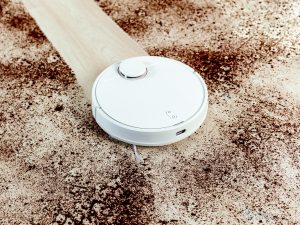
To maximize performance on different surfaces, it’s crucial to choose the right cleaning mode for the job. Many robot vacuums come with multiple cleaning modes, which can be selected depending on the type of flooring you want to clean. For example, some models have a “turbo” mode specifically designed for carpeted areas, while others have a “max power” mode for deep cleaning on all surfaces. Here are some tips to remember when selecting the appropriate cleaning mode for different surfaces:
On Hardwood Or Tile Floors:
- Opt for the “standard” or “auto” mode. This mode is suitable for everyday cleaning and will get the job done efficiently on hard surfaces.
- Avoid using the “turbo” mode as it may cause the vacuum to move too quickly, potentially leading to skidding or damage to your floors.
On Carpets Or Rugs:
- Choose the “turbo” or “max power” mode. These modes provide additional suction power, allowing the vacuum to effectively clean embedded dirt and pet hair from your carpets or rugs.
- If your robot vacuum has a height adjustment feature, make sure to set it to the appropriate level for optimal cleaning on different carpet types.
On High-pile Carpets:
- High-pile carpets require a bit more attention. Ensure your robot vacuum has a brush roll designed for these types of carpets to prevent tangling or clogging.
- Choose the “max power” mode, if available, for a deeper clean on high-pile carpets.
Remember that each robot vacuum may have slightly different cleaning modes and features, so it’s always a good idea to consult the user manual for specific recommendations and guidelines. By preparing your floors, clearing cluttered areas, and choosing the right cleaning mode, you can optimize your robot vacuum’s performance on different surfaces, ensuring a thorough and efficient clean every time.
Maintenance And Care For Longevity
Proper maintenance and care are essential for ensuring the longevity of your robot vacuum. By understanding the necessary steps to keep your robot vacuum in optimal condition, you can enjoy cleaner floors and extend the lifespan of your device. In this section, we will discuss some key maintenance tasks to ensure the efficient functioning of your robot vacuum.
Cleaning The Sensors And Wheels
Regularly cleaning the sensors and wheels of your robot vacuum is crucial for uninterrupted performance. Dust and debris can accumulate on the sensors, hindering their functionality. Use a soft, dry cloth to gently wipe the sensors and wheels of your vacuum, ensuring that no dirt or grime obstructs their operation. This simple task can prevent issues and extend the life of your robot vacuum.
Checking And Replacing Brushes
The brushes of your robot vacuum are subjected to continual wear and tear as they sweep and agitate debris. Regularly inspecting the condition of the brushes and replacing them when necessary is vital for maintaining peak performance. If you notice any signs of wear or damage, refer to the manufacturer’s guidelines to replace the brushes with compatible replacements, ensuring that your robot vacuum continues to effectively clean your floors.
Keeping The Vacuum Charged
Regularly charging your robot vacuum is essential for its sustained operation. Ensure that the charging station is positioned in an accessible location and that the vacuum returns to it after each cleaning cycle to recharge. By keeping the vacuum charged, you can prevent interruptions in its cleaning schedule and prolong its functional life.
Frequently Asked Questions On Can Robot Vacuums Go Over Bumps
Can Robot Vacuums Go Over Bumps?
Yes, most robot vacuums are designed to navigate over small bumps and thresholds effortlessly.
Conclusion
Robot vacuums have come a long way in terms of functionality and adaptability. While they may struggle with certain obstacles, such as bumps in the floor, many modern models are equipped with advanced technology that allows them to navigate these types of challenges with relative ease.
By taking into account the specific features and capabilities of different robot vacuum models, homeowners can ensure a smooth and efficient cleaning experience, even on uneven surfaces. So, if you’re worried about your robot vacuum going over bumps, rest assured that there are options available that can handle this task effectively.